

PHIL · ADDYI: Connecting Search Discovery to Clinical Fulfillment
Architecting an AI-assisted Direct-to-Patient (DTP) healthcare ecosystem transforming complex prior authorizations, opaque drug pricing, and fragmented pharmacy fulfillment into a frictionless, e-commerce-velocity patient journey.
Lead Product Designer
UX Strategist
SEO Optimization
Landing Page Strategy
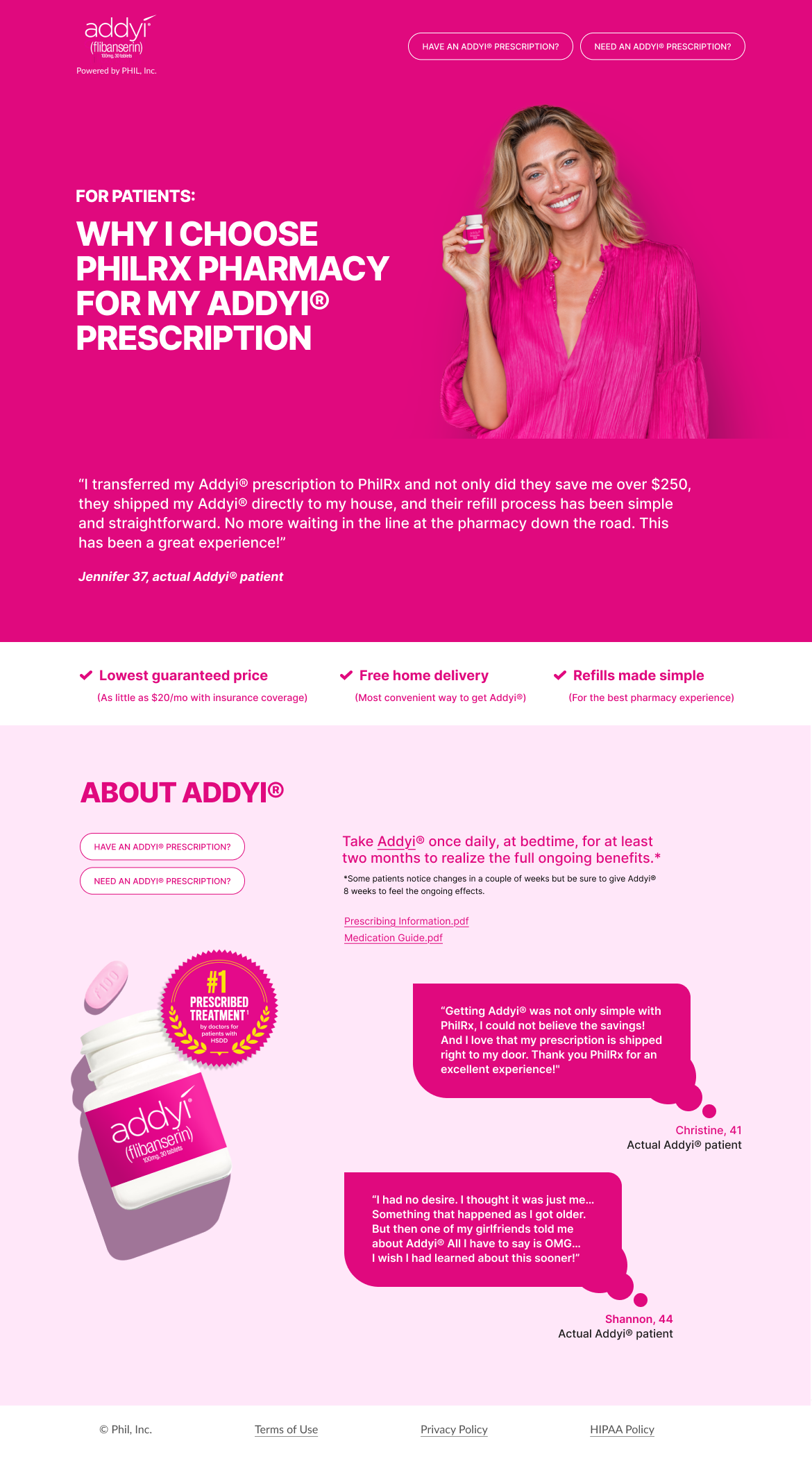
The opportunity went beyond simply improving search rankings. We needed to create a clear path from discovery to prescription fulfillment—helping people find a partner through search, understand the offering, build trust, and then transition seamlessly into PHIL’s secure digital pharmacy experience.
I led the UX design and page structure for a new search-optimized partner experience. I designed the landing page around two goals that had to work together: increase qualified organic traffic and make the experience genuinely useful for patients.That meant creating a responsive information architecture that made the partner’s value clear, strengthened search performance through intentional content hierarchy and internal linking, and guided users toward the next step without making the experience feel like an SEO page.
Once users were ready to move forward, the experience connected them directly into PHIL’s platform, where intake, prescription access, checkout, and fulfillment come together in an e-commerce-like experience.
I also designed the solution as a repeatable framework rather than a one-off page. The same structure could be extended to additional DTP partners and manufacturers, giving PHIL a scalable way to support partner launches, increase discoverability, and create new opportunities for qualified lead generation.
What started as a search visibility problem became a broader product and growth opportunity: connect partner discovery, patient experience, and PHIL’s pharmacy platform into one continuous journey.
How it came togehter
How I Think
I try not to solve only the problem I’m handed.
With Addyi, the initial ask was about search visibility, but I quickly saw a bigger issue. Getting someone to the page was only the beginning. They still had to understand the treatment, trust what they were seeing, and know what to do next.
So I started thinking about the full journey, not just the landing page: what brings someone here, what questions they have when they arrive, and what needs to happen before they feel ready to move forward.
How I Work
I usually start by getting clear on what the user needs and what the business needs, then look for where those things overlap.
For Addyi, the business needed stronger organic traffic and a path into PHIL. The patient needed clear information and an experience that didn’t feel like it was built for search engines.
I worked through the information hierarchy, content structure, calls to action, and transition into PHIL so the experience felt useful first and optimized second. I also kept asking whether we were solving this only for Addyi or creating something PHIL could use again.
How I got to my solution
The solution came from connecting search, education, and prescription fulfillment into one journey.
The landing experience helped people find and understand Addyi. When they were ready, they could move directly into PHIL for intake, prescription access, checkout, and fulfillment.
I also designed the structure as a repeatable framework, so PHIL could use the same approach with future partners instead of starting over each time.
What started as a search problem became a way to connect discovery to the actual product experience.